
“Drought tolerant” does not mean “no water”: starting a garden in a dry climate
The garden at Grounded began with choosing plants at Planta Livre. Since then it has been taking shape step by step, with tall cypress trees, soft silver foliage and natural textures. This article is about a label you will meet when choosing plants for a dry climate: “drought tolerant”, and what it does and does not mean for watering.
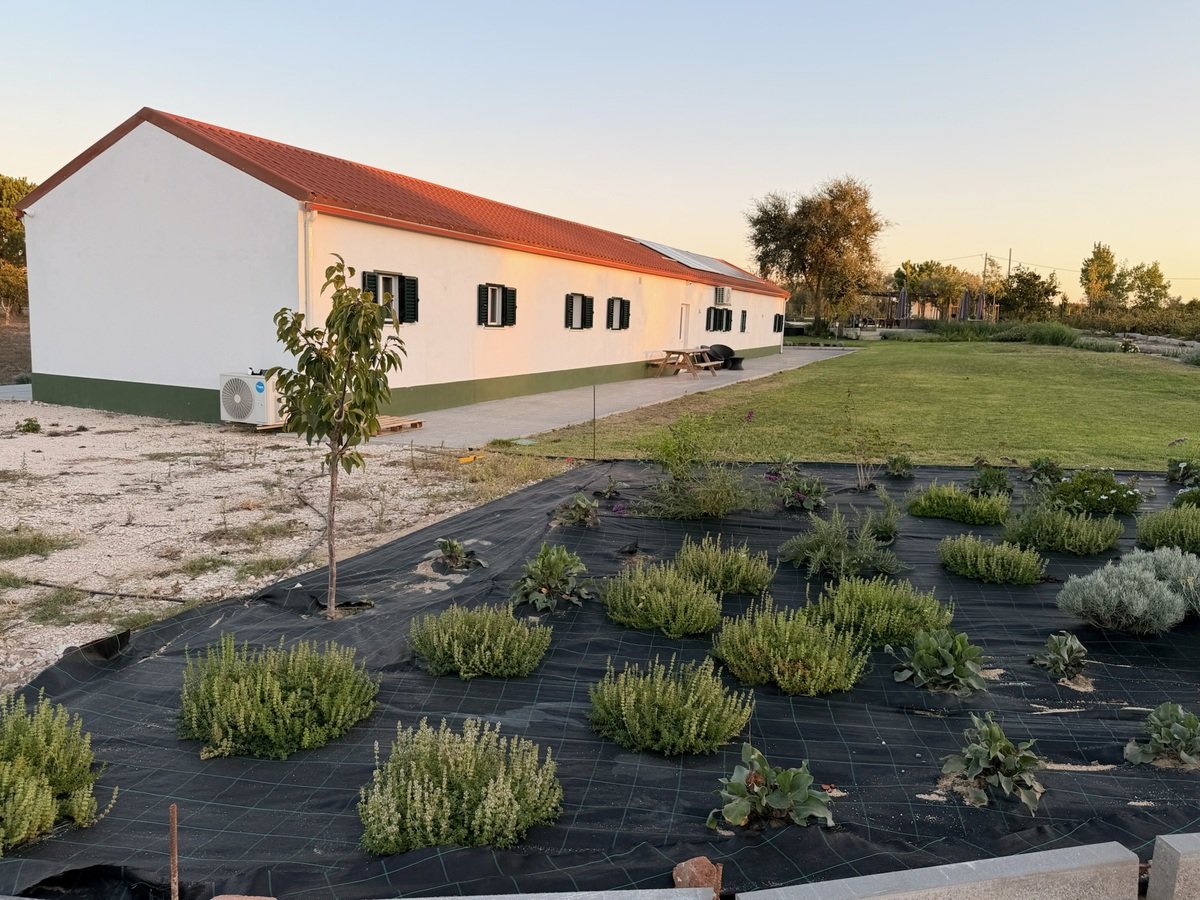
Plant labels often say “drought tolerant”. Gardening extension services are careful about what that means: these plants cope with dry spells once they are established. Until then they need regular water. Clemson University Extension notes that all plants need water while they build their root system, and that establishment can take from one to several years depending on the size of the plant. Washington State University Extension gives a similar rule: perennials need regular water at least through their first growing season, and trees and shrubs may need irrigation for up to three years.
The practical lesson is that a dry-climate garden is not a no-water garden. It is a garden where you water hard at the start, then less and less as the roots go deeper.
Four questions before you choose a plant
The Royal Horticultural Society suggests assessing the spot before picking plants. These are the questions that matter most:
- How much sun does the spot get? More sun widens the choice of plants that will cope with dry conditions.
- What is the soil like? Sandy soil drains fast and holds little water. Clay holds water but can waterlog.
- How big will the plant be in a few years? A small pot becomes a large shrub. Space it for its adult size.
- How will it get water in its first year? Decide this before you buy, not after the first heatwave.
Try it where you live
If you have a balcony, try one plant from a dry region, such as rosemary or lavender, and one thirsty plant in similar pots. Give both the same position and watch how differently they respond over a few weeks. You will learn more about water and roots from that than from any plant label.
The builder’s takeaway
Every build has a start-up cost. A plant, a product or a team needs the most attention at the beginning, and if you invest there, it can look after itself later. Plan the first year, not only the finished result.
Sources: Clemson Cooperative Extension, Washington State University Extension, Royal Horticultural Society.