
28 November 2026 · Grounded
Catching water with the land: a short lesson in swales
On dry land, the question is rarely how much rain falls. It is how much of it stays. Rain that lands on a slope can run off in hours, carving channels, carrying topsoil with it and flooding the low points. A swale is one of the simplest tools for changing that.
What a swale is
A swale is a shallow ditch dug along the contour of a slope, with the excavated soil piled on the downhill side as a soft berm. Because it follows the contour, every point of the ditch sits at the same height. Water that flows into it does not rush along. It stops, spreads along the whole length and slowly soaks into the ground.
That is what separates a swale from a drainage ditch. A ditch is tilted: its job is to collect water and move it away as fast as possible. A swale is level: its job is to hold the water where it fell and give it time to infiltrate. One exports a resource. The other stores it in the soil, within reach of roots for weeks after the last rain.
What we built
A study of the terrain on our land near Coruche showed where rainwater naturally converges and where the low ground floods in winter. From that map we shaped a simple system: three swales on contour slow the runoff and guide it towards infiltration, a small pond (the charca) catches water at a low point, and a larger lake stores it for slow use through the dry months.
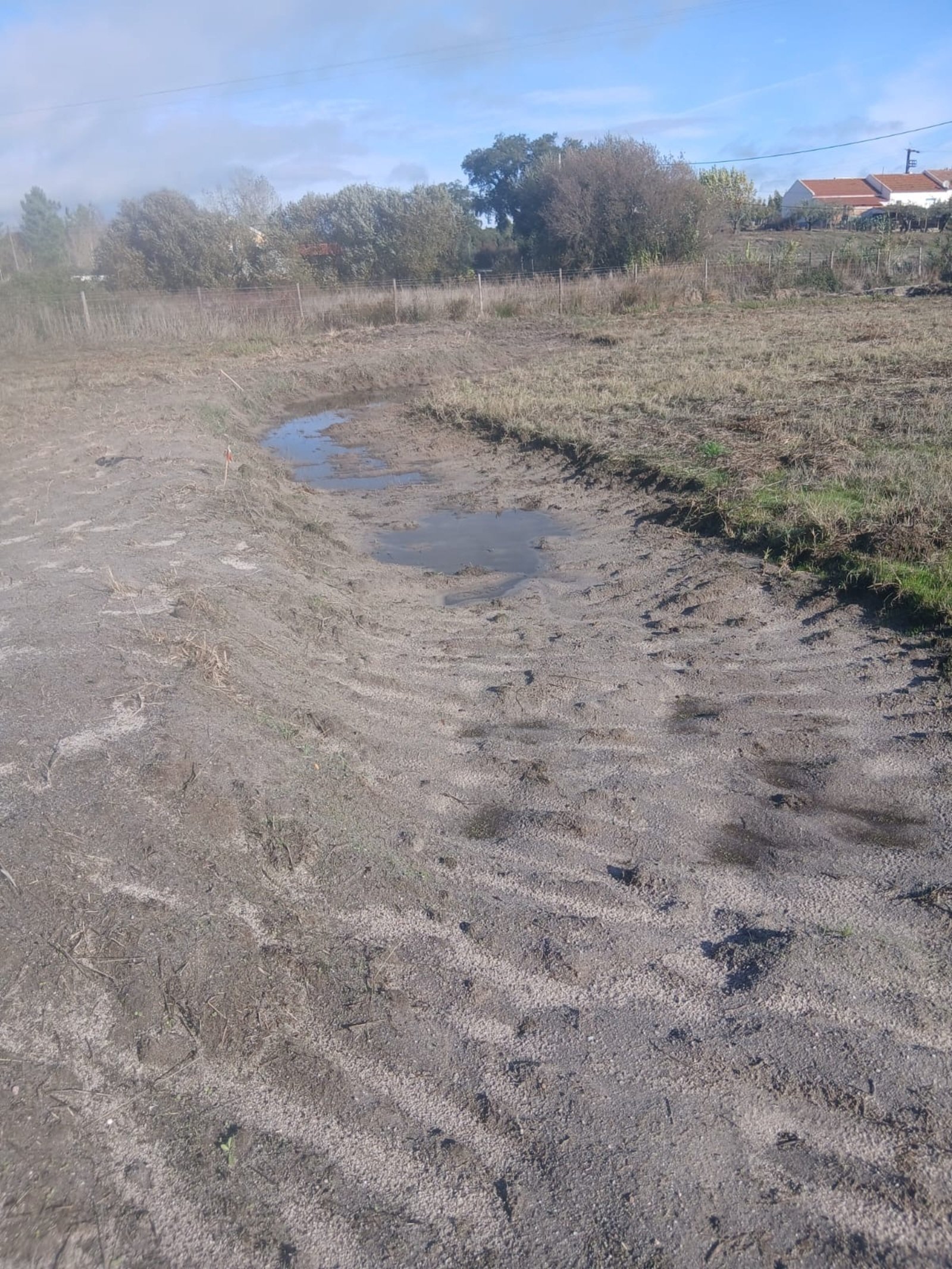
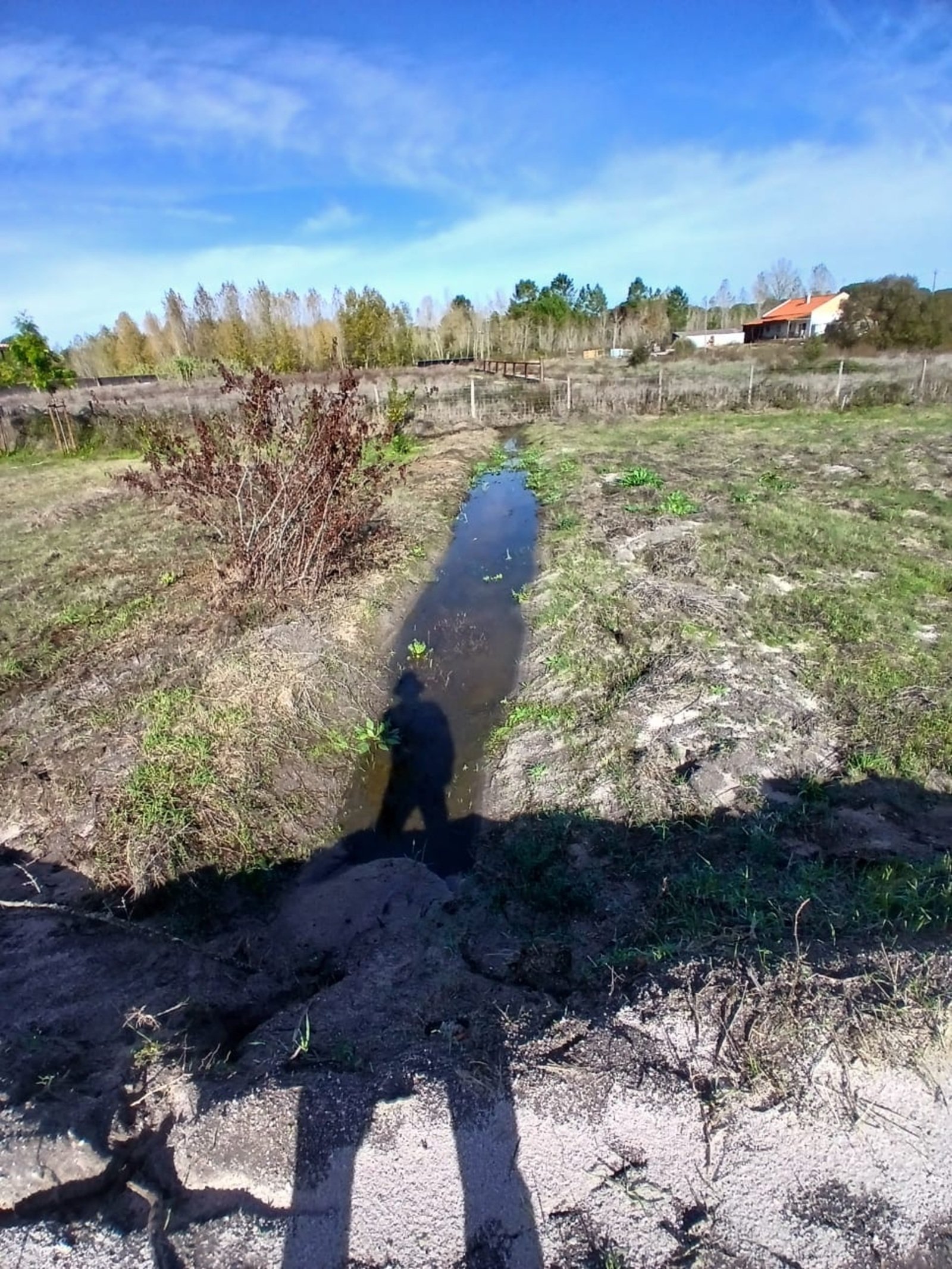
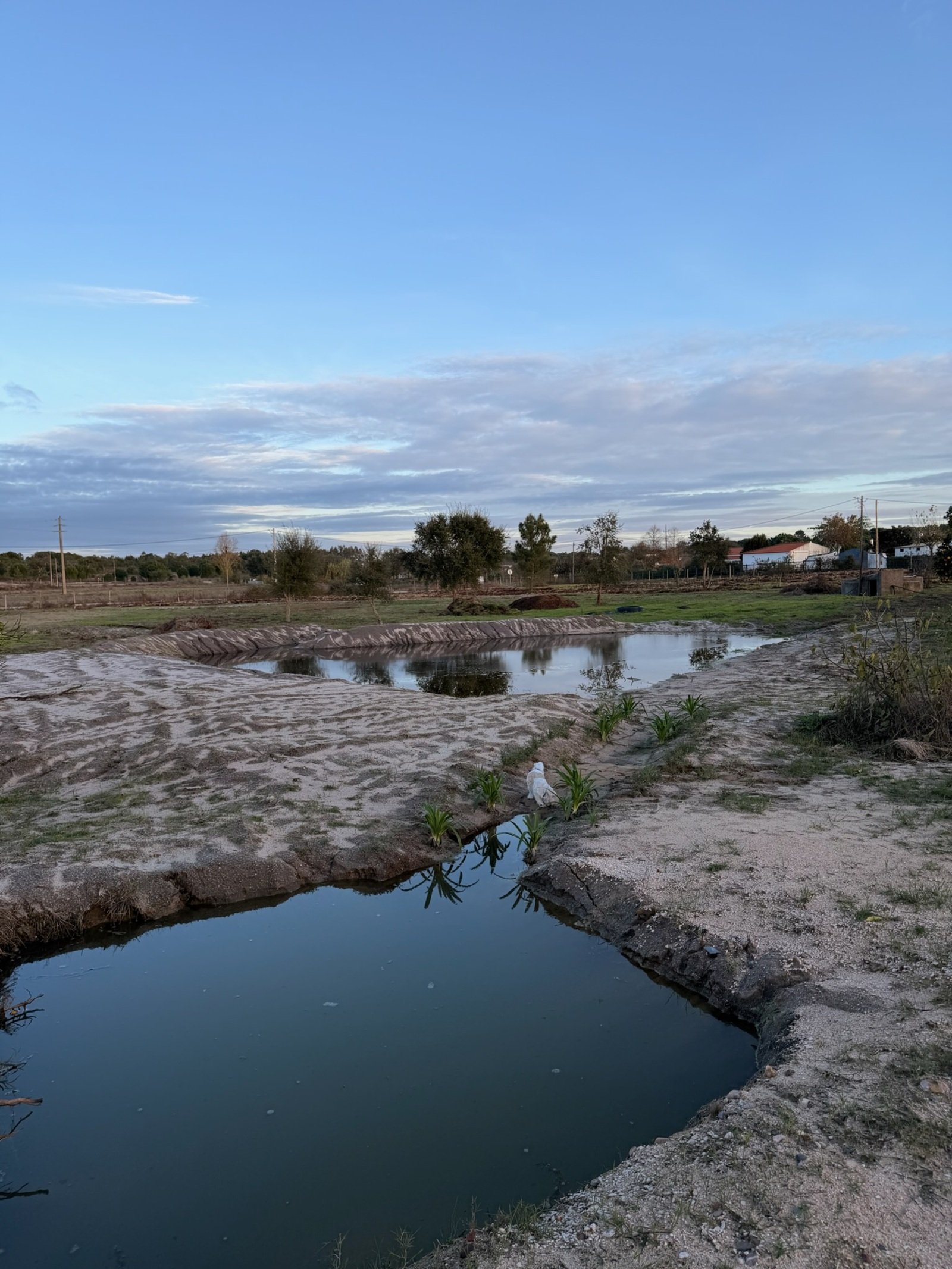

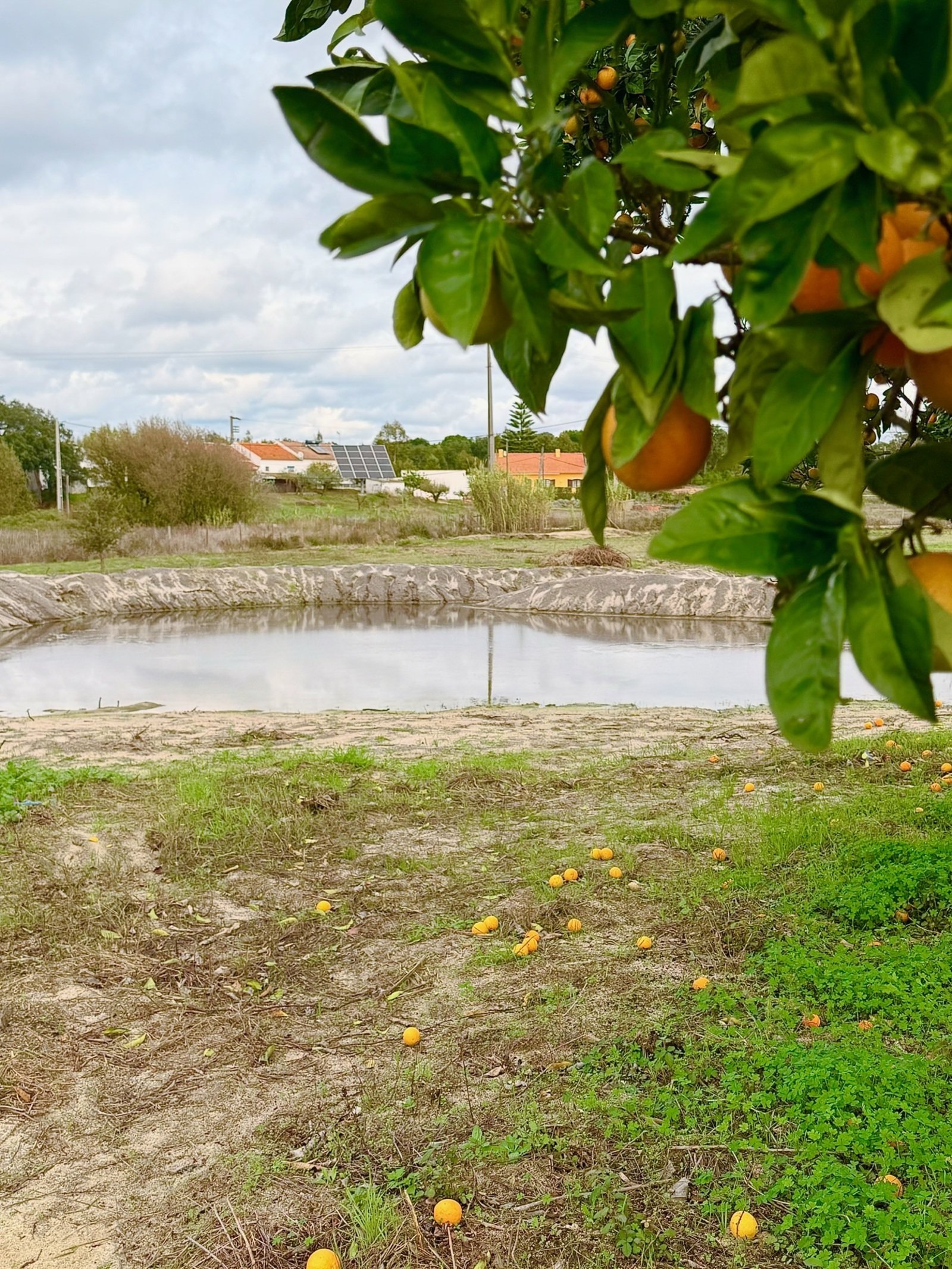
These photos are from November 2026, days after the digging finished and the first autumn rains arrived. The swales are already holding standing water, days after the rain.
Builder’s takeaway
-
Read the contour before you dig. A swale only works if it is level from end to end; a simple water level or A-frame is enough to mark it.
-
Plan the overflow. Every swale and pond needs a safe overflow sized for local conditions, worked out from a qualified assessment of the site.
-
Think of storage as a chain: slow the water on the slope, sink what you can, and store the rest for the dry season.
-
Match the tool to the ground. Swales belong on gentle slopes and soil that can take water; on steep, unstable or already waterlogged ground they are the wrong tool, so have the land assessed first.
Try it at home
You can watch the principle on a baking tray. Tilt it slightly and pour a cup of water at the top: it runs to the bottom in seconds. Now roll a rope of modelling clay across the tray, following the contour like a miniature swale, and pour again. The water spreads along the ridge and sits there. Same water, same slope, different result.
Sources
-
TreeYo Permaculture: Earth working and permaculture swales
-
Permaculture News: Water harvesting and storage