Our Story
Not a blank canvas
It is tempting to treat land as a blank canvas: clear it, level it, draw your plan on top. We tried to do the opposite.
The land already had a design, written in its contours. Our earthworks follow that logic: swales that slow rainwater and let it sink into the soil, and a new lake. In October 2024 the fields were full of machines and materials.
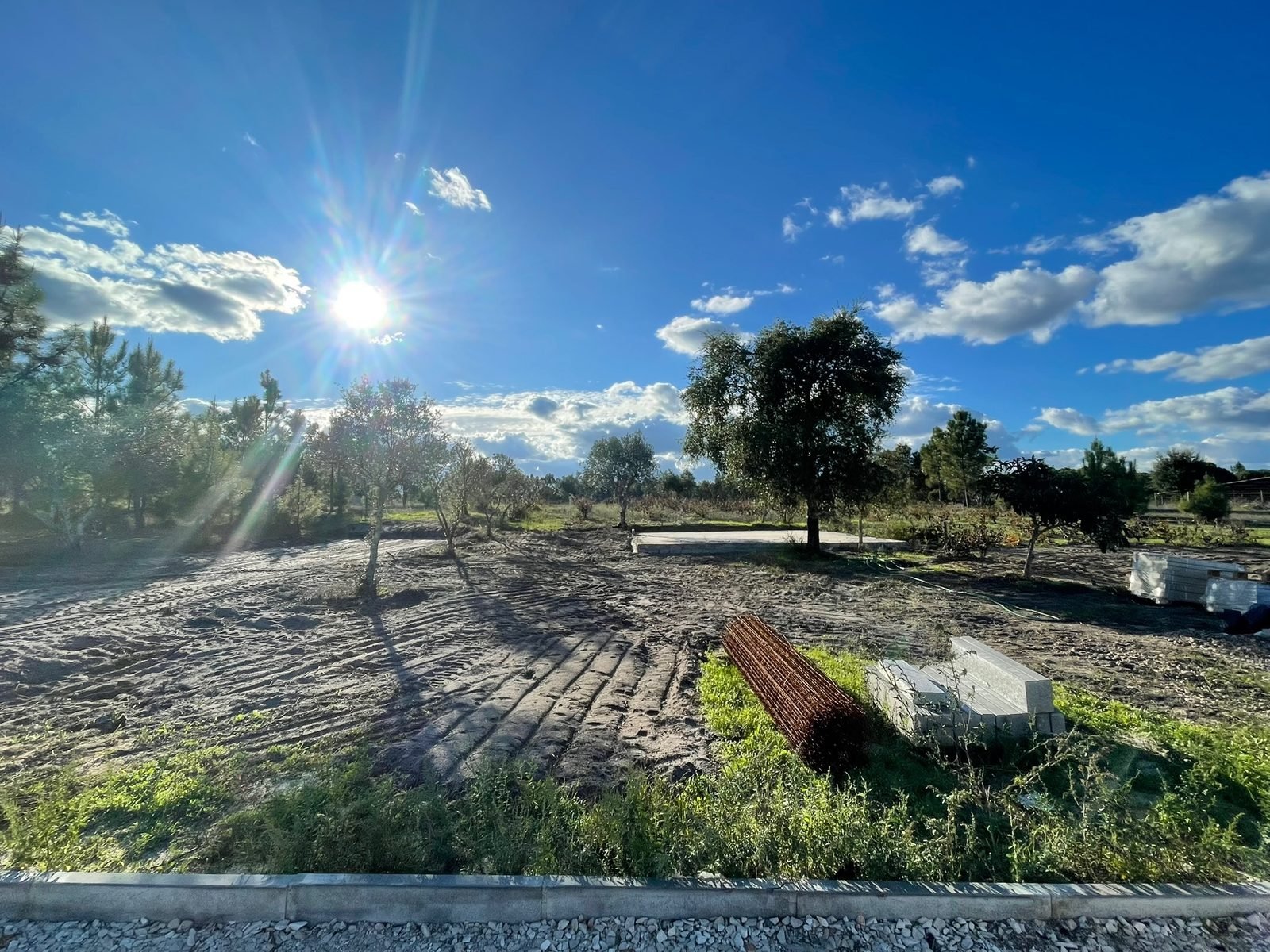
The trees that were already here stayed — cork oaks, olives, orange trees, figs and pomegranates — and the garden grew up among them. Around eighty new trees and some thirteen hundred shrubs have joined the old ones since, with pathways winding between. The landscaped areas are covered in pine-bark mulch over landscape fabric, with the irrigation running hidden underneath. We chose bark because we like the look of it, and because it creates a transition toward the agricultural part of the land that comes next.
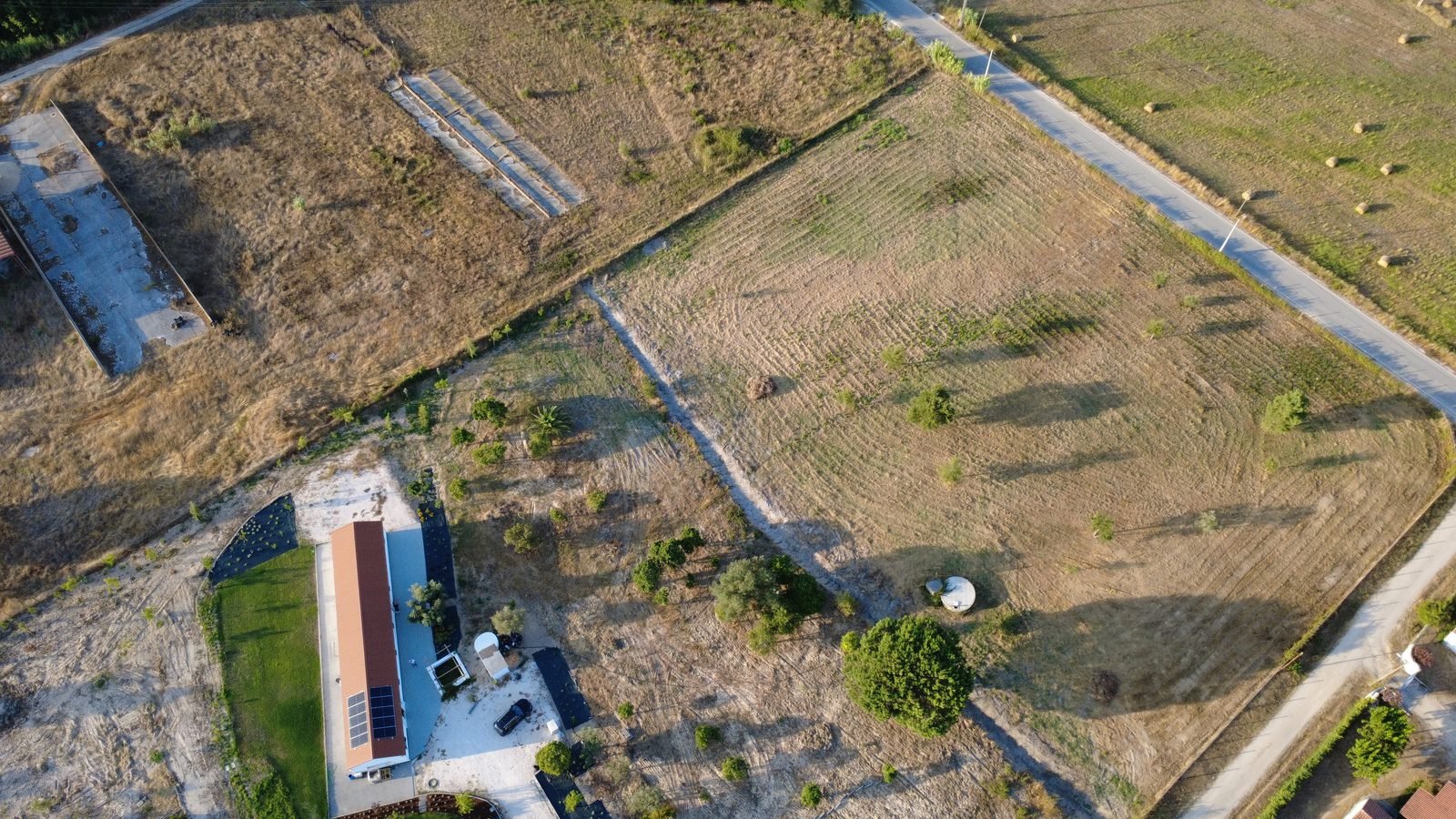
In the autumn of 2026 the first regenerative fields were planted with our partners Florestas de Iroko: irrigation lines first, then organic matter and soil preparation, then the plants themselves. The old water tank still stands in the middle of it all, a reminder that every generation here has had to solve the same problem of water.
A blank canvas would have been easier. It would not have been half as interesting.