
Our Story
Story of the Land
Every piece of land arrives with a past. Ours began announcing its own on the first walks here, in March 2023.
The street is called Rua da Vinha, vine street, and the land agrees with it. The vineyard rows were planted some forty years ago, and they are still there to read: long lines in the soil. The farm grew rice at one time, and many vegetable crops over the years. When exactly each chapter happened is something we are still learning.
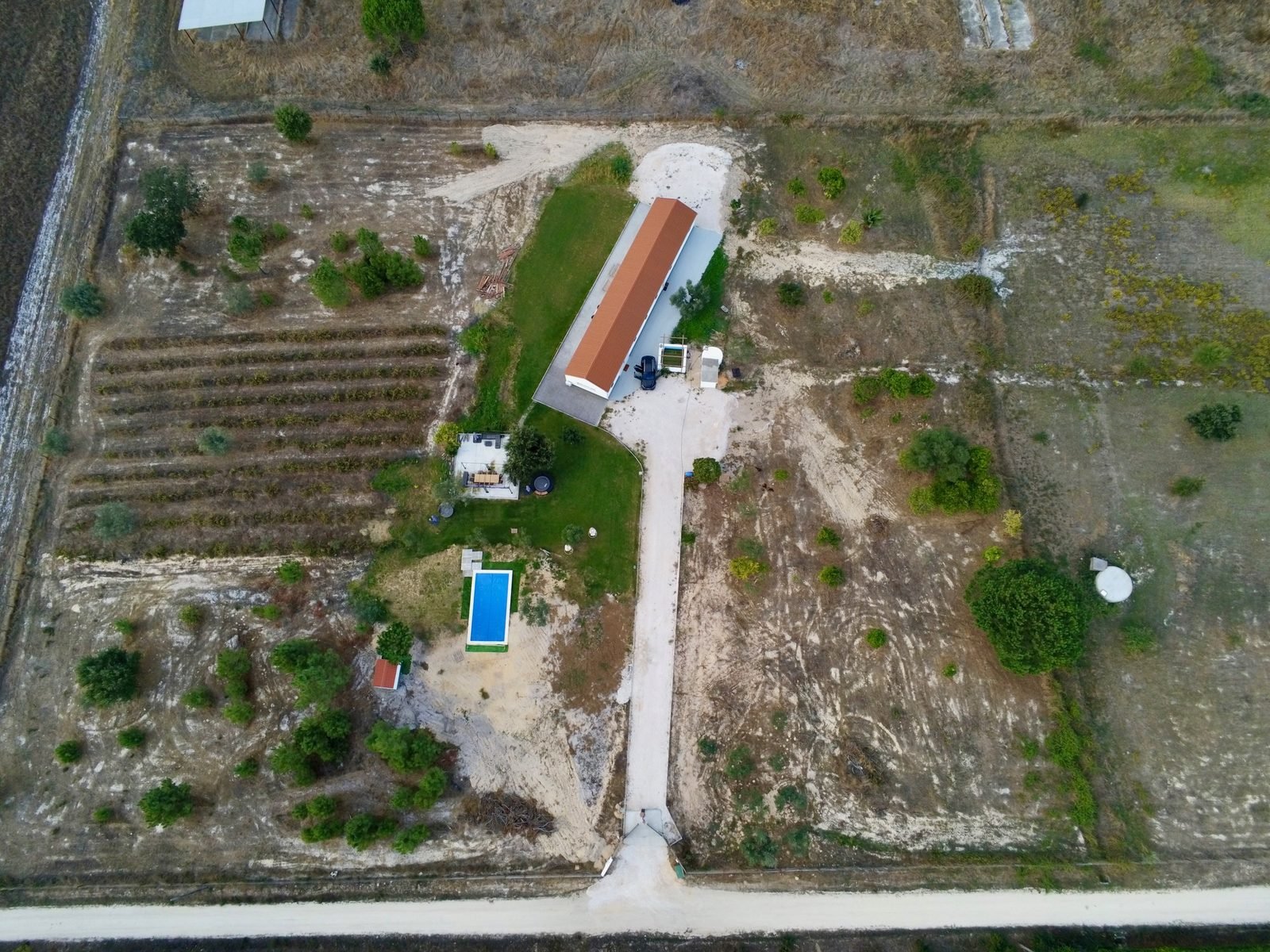
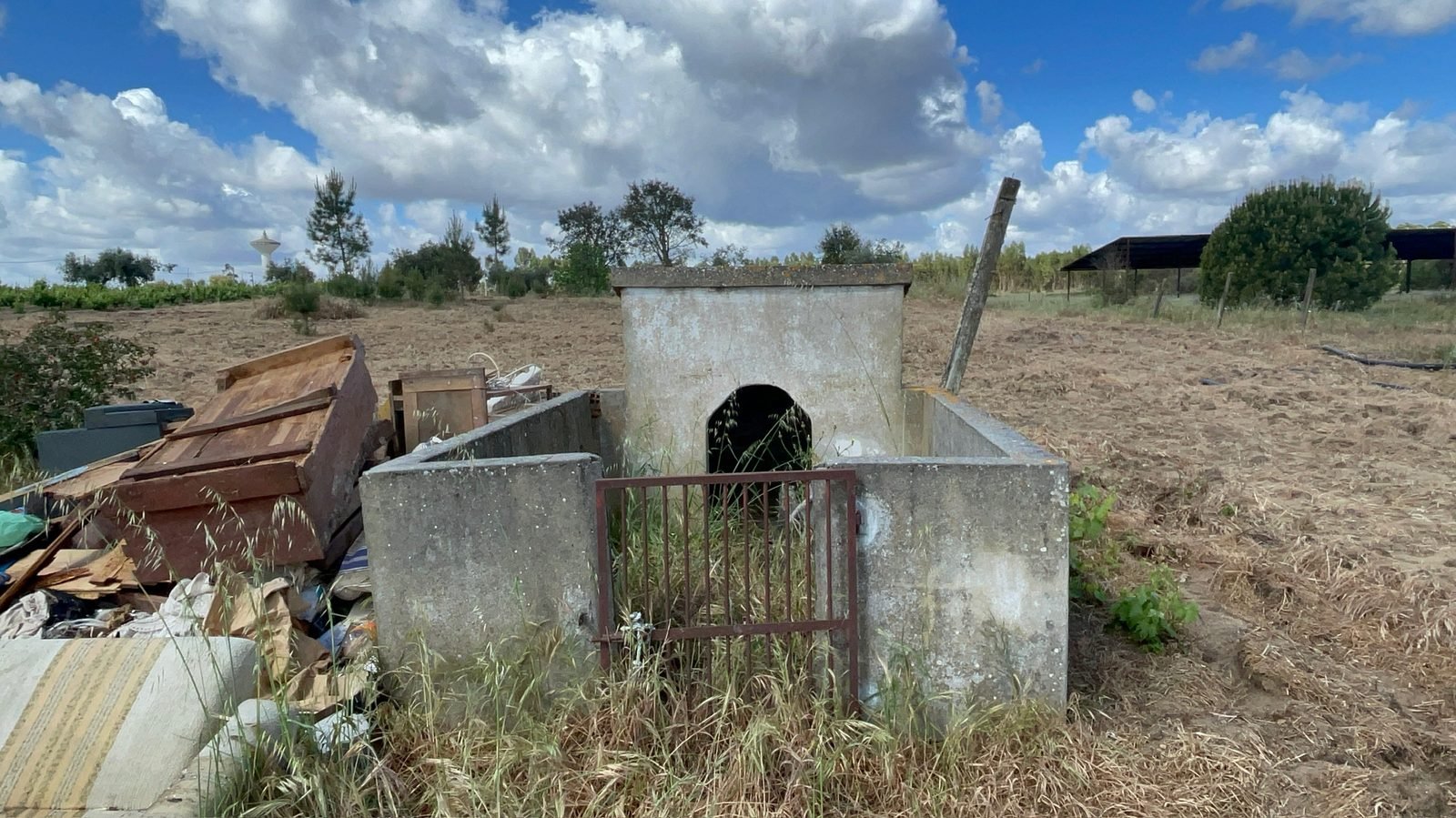
There is a round concrete water tank in the field, the kind that tells you water has always mattered here. And there was an old brick-and-concrete structure from the farm's working days: part of it had to come down, and what could be saved was rebuilt.
What we found was not a finished farm but a resting one: open fields, scattered trees, a house with a terracotta roof, and more sky than we knew what to do with. It had clearly been worked before, and it was waiting for someone to work it again.
Some things stayed exactly where they were: most of the vineyard, above all the wine grapes, the cork oaks, the olive trees, the orange trees, a few figs and pomegranates, and the wells. Others had to go, like the old bread oven and the pig house. And then there is the eira, the threshing floor where the cereals and rice were once worked: today the barbecue stands there, and on warm nights the lights come on and the jacuzzi runs a few steps away.
That is the part of the story we get to write. The land is becoming a homestead and a regenerative landscape: a garden, new trees, water held in the ground, and a farming partnership with Florestas de Iroko, who planted the first regenerative fields with us in the autumn of 2026.
We did not want a blank canvas. We wanted exactly this: a place with a past, that we could help into its next chapter. The next story is about working with what was already here.